 01244 343 353
See what your dream smile will look like… before you commit
The cosmetic outcome of a new smile can be daunting. Will you really like what you think you desired?
The presentation of photos seen in the media or on the internet may not always reflect which smile may suit you.
The interpretation of “beautiful teeth” is very subjective and differs from one individual to another, even from one culture to another.
A smile design depends on:
- the proportions of the sizes of your teeth
- the alignment of your teeth
- the symmetry of the right and left sides
- the shape of your upper and lower jaw
- the curvature of your lower lip when you smile
- the amount of gum you show when you smile
- if you are male or female
There are of course “rules” that determine and that are fully established in dentistry to create a balanced smile. These must be taken into account when planning a new smile, both by the practitioner and the laboratory team.
An experienced and cosmetically trained dentist and technician will be able to apply these rules and will help to ensure that patients will be delighted with their treatment outcome.
What we do at Mouth Matters
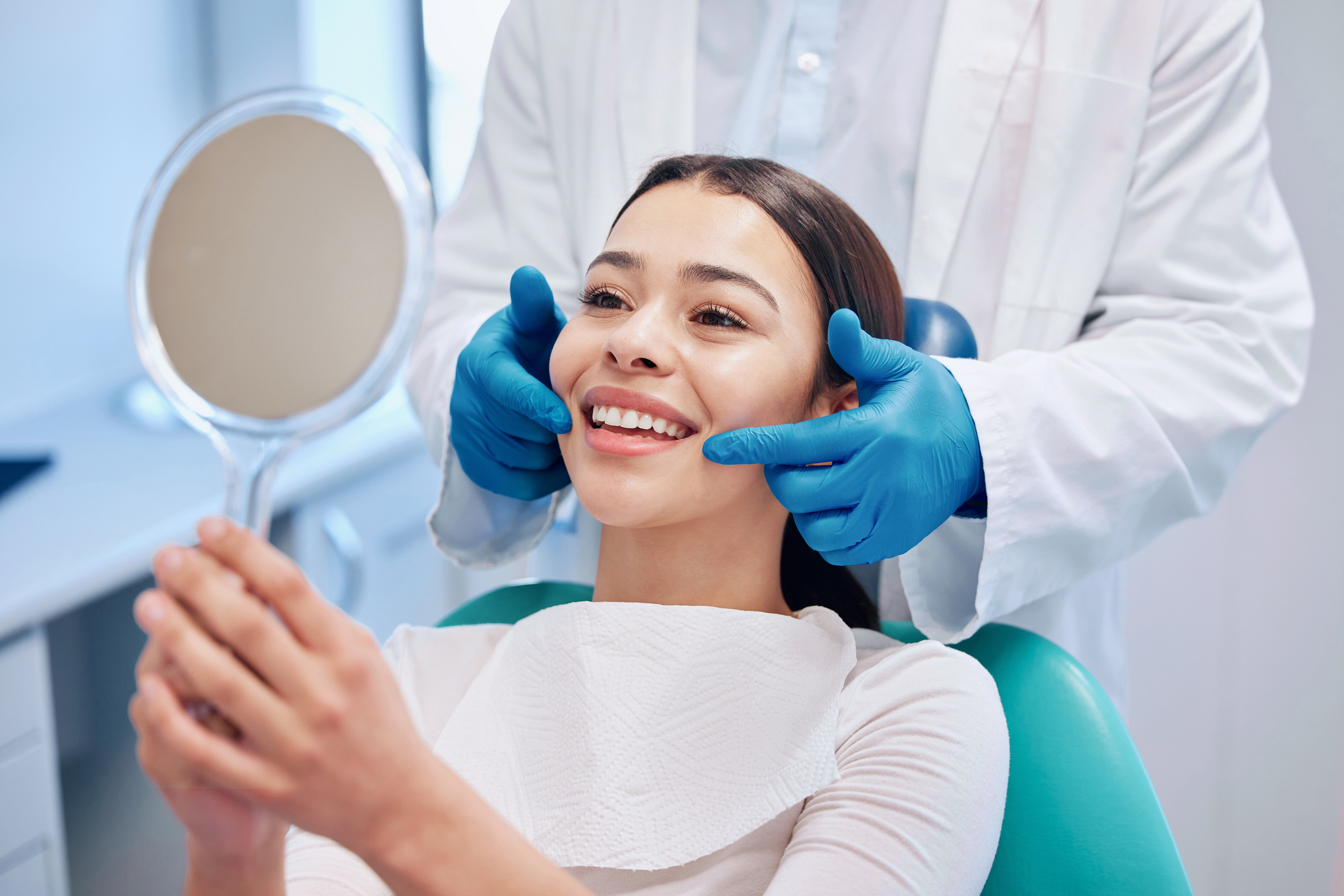
To warrant patient satisfaction Dr.Tschoepe will be performing “the mock” at your consultation appointment if you wish. This is not only complimentary but also helps with the communication between patient and dentist.
It will only take her a few moments to imitate what longer, shorter, more aligned teeth will look like.
Dr Tschoepe will add small amounts of white filling material to your natural teeth and you are able to view the result immediately.
You will of course be able to guide Dr.Tschoepe on your thoughts.
Smile design can be patient led as long as it is clinically possible and is in the best interest of the patient.
Your are encouraged to take a photo to view a “before and after”result. The provisionally added material will be removed at the end of your appointment.
A “mock” can also been constructed by the laboratory which is particularly important if ceramic veneers or crowns are treatment planned. This is then called a “diagnostic wax up”.
Treatments that can be included in your smile design
Depending on your goals and clinical needs, your personalised smile design may involve a combination of treatments. These can include:
- Teeth whitening to brighten your smile
- Composite bonding to reshape and refine teeth
- Porcelain veneers for a complete cosmetic transformation
- Crowns to restore both function and appearance
- Orthodontics to improve alignment
Each option can be discussed in detail during your consultation, allowing you to make an informed decision about what is right for you.
Ready to visualise your new smile?
Book your consultation today to experience a complimentary smile “mock” and see your potential results before committing to treatment.
 Back to blog index